
$139.89
Add to Cart
1Pcs Agave Burnt Burgundy Cacti Flower Live Houseplant Easy Care Live Plant
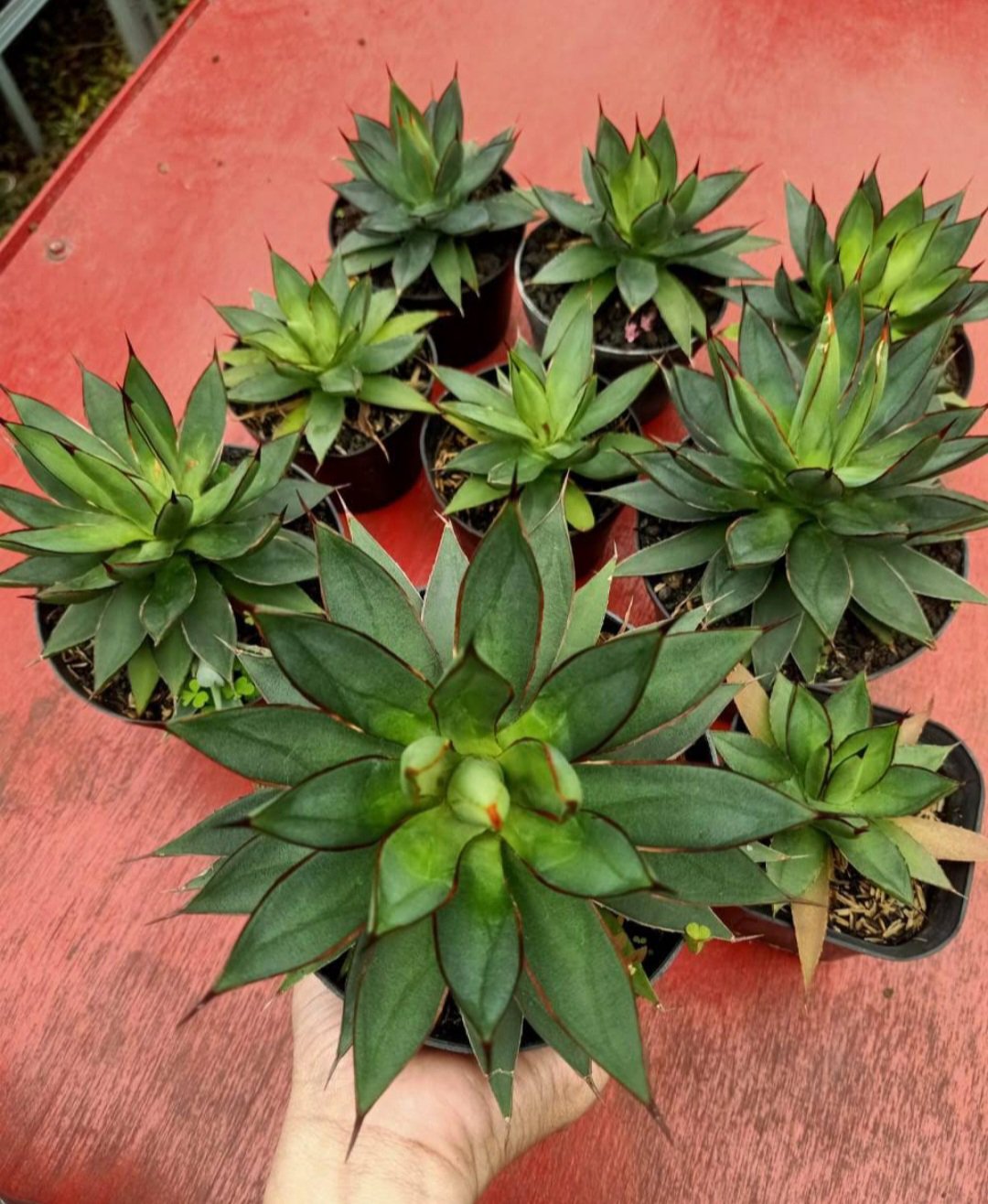
1Pcs Agave Burnt Burgundy Cacti Flower Live Houseplant Easy Care Live Plant
Agave plants are succulents known for their striking appearance and resilience. Here's how to care for them:
Light: Agaves thrive in full sunlight. Place them in a sunny location where they can receive at least 6-8 hours of direct sunlight per day. However, they can also tolerate partial shade, especially in hot climates.
Watering: Agaves are drought-tolerant plants that prefer dry soil conditions. Water your agave sparingly, allowing the soil to dry out completely between waterings. In cooler months or during dormancy, reduce watering frequency to prevent root rot. Overwatering is the most common cause of problems with agaves.
Soil: Plant agaves in well-draining soil mix designed for succulents or cacti. A mixture of sand, perlite, and potting soil works well. Ensure the pot has drainage holes to prevent water from accumulating around the roots.
Temperature: Agaves prefer warm temperatures between 65°F to 90°F (18°C to 32°C). They can tolerate occasional temperature drops, but prolonged exposure to freezing temperatures can damage or kill the plant.
Fertilization: Agaves are not heavy feeders, but you can fertilize them sparingly during the growing season (spring and summer) with a balanced, water-soluble fertilizer diluted to half-strength. Avoid fertilizing during the winter months or dormancy.
Pruning: Remove any dead or damaged leaves from your agave using clean, sharp pruning shears. Be careful of the sharp spines along the leaf edges. Pruning can help maintain the plant's appearance and remove any diseased or pest-infested foliage.
Propagation: Agaves can be propagated by division or by collecting offsets (pups) that grow around the base of mature plants. Remove offsets with a clean, sharp knife and plant them in well-draining soil.
Pests and Diseases: Agaves are generally resistant to pests and diseases, but they may occasionally attract aphids, mealybugs, or scale insects. Inspect your plants regularly, especially new growth and the undersides of leaves, and treat any infestations promptly with insecticidal soap or neem oil.
Potting and Repotting: Agaves are slow-growing plants and typically do not require frequent repotting. Repot only when the plant has outgrown its container, using fresh well-draining soil.
Overwintering: In cooler climates, protect outdoor agaves from frost by bringing them indoors or providing frost protection such as covering them with a blanket or moving them to a sheltered location.
By following these care tips, you can enjoy healthy and vibrant agave plants in your garden or home landscape.
In the photo is not factual item...
The size live plant item depends on stock...
Thank you
Agave plants are succulents known for their striking appearance and resilience. Here's how to care for them:
Light: Agaves thrive in full sunlight. Place them in a sunny location where they can receive at least 6-8 hours of direct sunlight per day. However, they can also tolerate partial shade, especially in hot climates.
Watering: Agaves are drought-tolerant plants that prefer dry soil conditions. Water your agave sparingly, allowing the soil to dry out completely between waterings. In cooler months or during dormancy, reduce watering frequency to prevent root rot. Overwatering is the most common cause of problems with agaves.
Soil: Plant agaves in well-draining soil mix designed for succulents or cacti. A mixture of sand, perlite, and potting soil works well. Ensure the pot has drainage holes to prevent water from accumulating around the roots.
Temperature: Agaves prefer warm temperatures between 65°F to 90°F (18°C to 32°C). They can tolerate occasional temperature drops, but prolonged exposure to freezing temperatures can damage or kill the plant.
Fertilization: Agaves are not heavy feeders, but you can fertilize them sparingly during the growing season (spring and summer) with a balanced, water-soluble fertilizer diluted to half-strength. Avoid fertilizing during the winter months or dormancy.
Pruning: Remove any dead or damaged leaves from your agave using clean, sharp pruning shears. Be careful of the sharp spines along the leaf edges. Pruning can help maintain the plant's appearance and remove any diseased or pest-infested foliage.
Propagation: Agaves can be propagated by division or by collecting offsets (pups) that grow around the base of mature plants. Remove offsets with a clean, sharp knife and plant them in well-draining soil.
Pests and Diseases: Agaves are generally resistant to pests and diseases, but they may occasionally attract aphids, mealybugs, or scale insects. Inspect your plants regularly, especially new growth and the undersides of leaves, and treat any infestations promptly with insecticidal soap or neem oil.
Potting and Repotting: Agaves are slow-growing plants and typically do not require frequent repotting. Repot only when the plant has outgrown its container, using fresh well-draining soil.
Overwintering: In cooler climates, protect outdoor agaves from frost by bringing them indoors or providing frost protection such as covering them with a blanket or moving them to a sheltered location.
By following these care tips, you can enjoy healthy and vibrant agave plants in your garden or home landscape.
In the photo is not factual item...
The size live plant item depends on stock...
Thank you


 ID, jawa timur